Top 10 Solar Project Solution Factory In China

What is ATS?
ATS (Automatic Transfer Switch) is the most widely used dual-power switching device in power systems. Its core characteristics are a mechanical structure and a relatively long switching time. It is primarily used to automatically switch between a primary power source (utility grid) and a backup source (diesel generator). The switching time typically ranges from several seconds to tens of seconds. When one power source fails, the ATS automatically transfers the load to the other to ensure continuous supply.
What is STS?
STS (Static Transfer Switch) is a high-speed, non-mechanical electronic switch used for uninterruptible switching between two independent AC power sources. Its core mission is to transfer the load to a backup source within milliseconds when the primary source fails, ensuring the load equipment experiences virtually no downtime. It is often used in conjunction with energy storage systems.
| Dimension | ATS (Automatic Transfer Switch) | STS (Static Transfer Switch) |
| Operating Principle | Mechanical: Driven by motors or electromagnetic actuators. | Electronic: Based on power electronics like SCRs (Silicon Controlled Rectifiers). |
| Switching Time | Level of seconds. | Level of milliseconds (typically $\leq$ 50ms, some < 8ms). |
| Power Interruption | Experience brief power interruption during switching. | Achieves uninterruptible transfer; load is unaffected. |
| Synchronization | No strict requirement for synchronization between sources. | Requires sources to be synchronized (same frequency/phase) to avoid impact. |
| Core Components | Relays, contactors, MCCBs, motor drive mechanisms. | High-speed SCRs, intelligent control boards, circuit breakers. |
| Application Scenarios | Firefighting systems, hospitals, malls, general industrial production lines. | Data centers, telecommunications, financial trading, precision industrial control. |
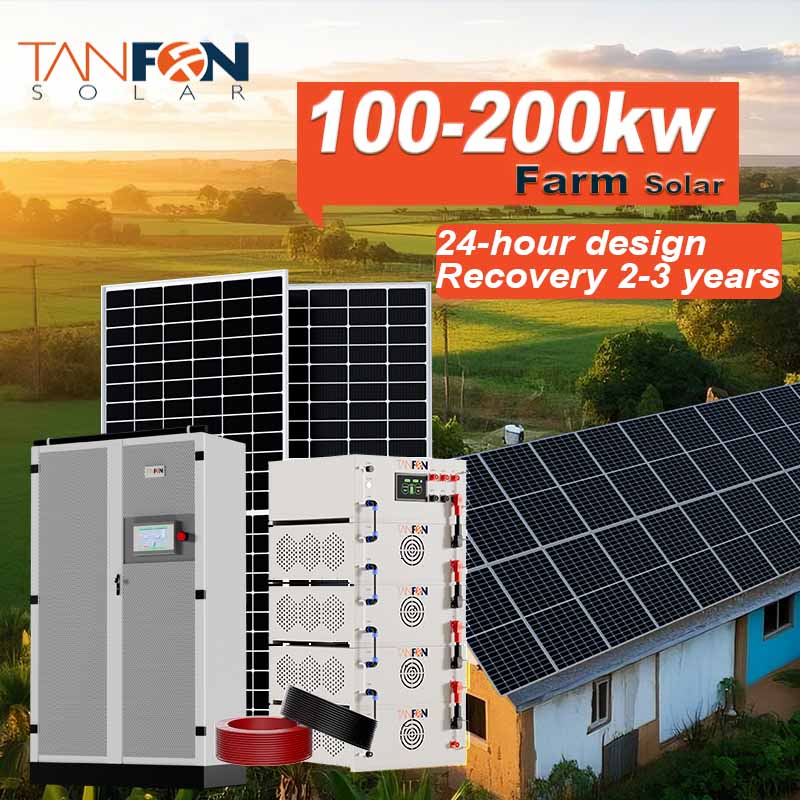

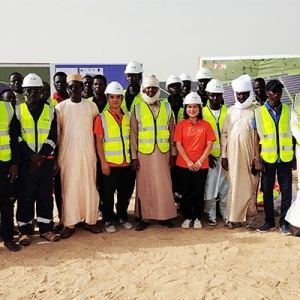
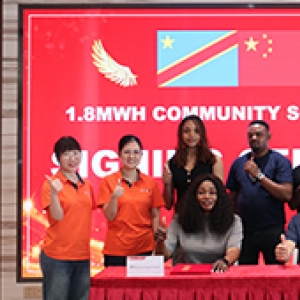
The King of the Democratic Republic of the Congo has provided a solar energy storage power station system for the village of Bunkeya to meet the electricity needs of 2500 small households in the village. As the village currently lacks access to the grid, the King requested the design of a 1MW solar panel system paired with a 1.8MWh lithium battery storage system to power the entire village.


Top 10 Solar Project Solution Factory In China


Address: 4th Floor, No. 7 Hongde Road, Nanzhuang, Chancheng District, Foshan City, GuangDong Province, China