Top 10 Solar Project Solution Factory In China
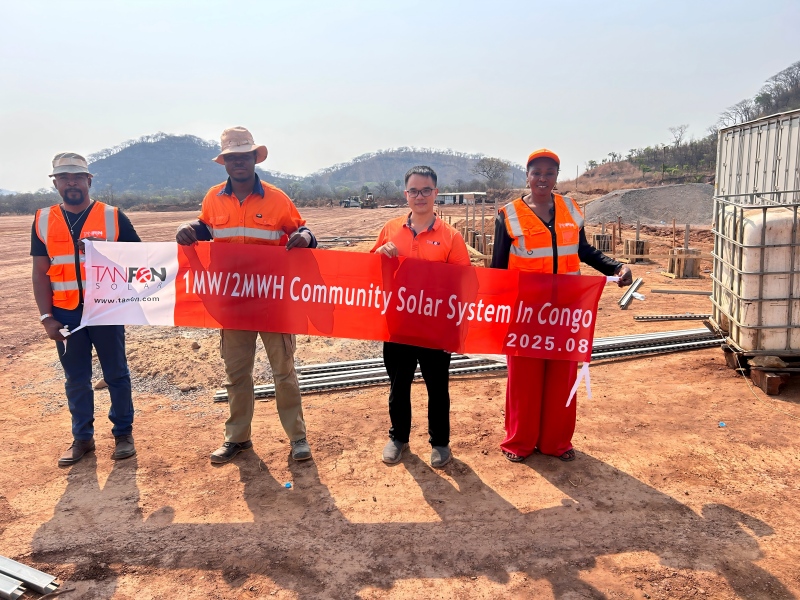
The Lubumbashi Village Electrification Project in the Democratic Republic of Congo (DRC) was developed to address a fundamental challenge: the village had no electricity coverage before the project.
The project combines a 1 MW solar power system with a 2 MWh battery energy storage system (BESS) to bring electricity to 580 households for the first time. Supported by diesel generators for periods of insufficient solar generation, the system is designed to improve electricity availability and provide a more reliable energy supply throughout the day and night.
Commissioned in April 2025, this project demonstrates how integrated solar generation, battery storage, and backup power can support community electrification and improve living conditions in areas with limited electricity infrastructure.
| Parameter | Project Details |
|---|---|
| Application | Village Electrification |
| Project Location | Lubumbashi, Democratic Republic of Congo |
| Stated System Capacity | 1 MW |
| Solar PV Modules | 1,760 × 600 W |
| Calculated Solar PV Capacity | 1.056 MWp |
| Battery Storage Capacity | 2 MWh |
| System Configuration | Solar PV + Battery Energy Storage + Diesel Generator Backup |
| Solar Inverters | 8 × 125 kW grid-tied inverters |
| Power Conversion System (PCS) | 2 × 500 kW |
| Households Electrified | 580 |
| Reported Electricity Supply | 24 hours/day |
| Commissioning Date | April 2025 |
| Production Period | 3 months |
| Delivery Period | 2 months |
| Commissioning Period | 40 days |
| Project / Funding Model | KING — details to be confirmed |
Before the project, the village had no electricity coverage. The lack of access to electricity significantly restricted residents' daily lives, children's ability to study after dark, and opportunities for productive activities.
The project needed to establish a dependable electricity supply from the ground up, rather than simply upgrade an existing grid connection.
A practical solution also had to account for variations in solar generation, particularly during rainy periods when sunlight may be limited. This made battery storage and a complementary backup power source important components of the overall energy system.
The project established a dedicated solar power plant to provide electricity to a previously unelectrified community. The system combines a 1 MW stated power-system capacity with 1,760 solar modules rated at 600 W each.
Together, the modules provide a calculated installed PV capacity of 1.056 MWp, enabling the system to harness solar energy as its primary renewable electricity source.
The 2 MWh battery energy storage system stores electricity for use when solar generation is insufficient or unavailable.
By integrating battery storage with solar generation, the project can better balance electricity production and demand, support evening consumption, and reduce dependence on immediate solar output.
Solar generation can fluctuate with weather conditions, especially during the rainy season. To address this challenge, the project integrates diesel generators as a complementary backup power source.
The combination of solar PV, battery storage, and diesel generation helps support electricity availability when renewable generation and stored energy alone cannot meet demand.
The system configuration includes eight 125 kW grid-tied solar inverters and two 500 kW power conversion systems (PCS).
These components form part of the project's solar generation and battery storage infrastructure. Their control, protection, and operating modes must be coordinated to support the intended system configuration and reliable power delivery.
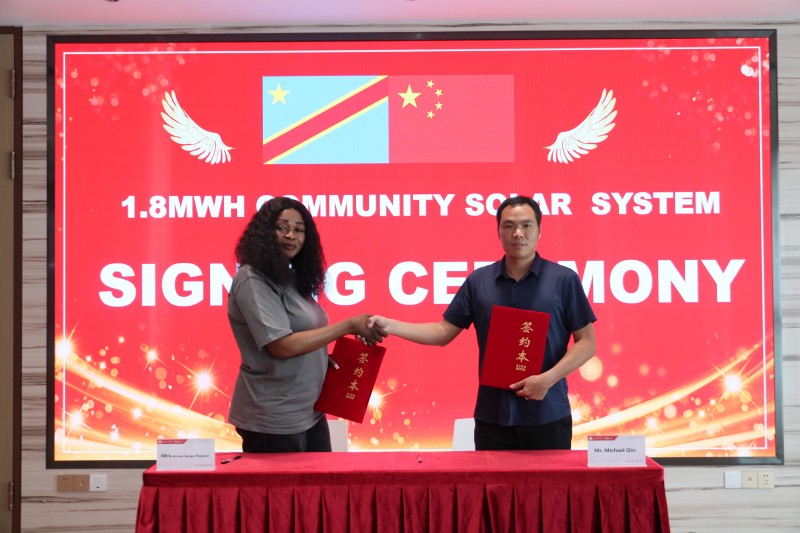
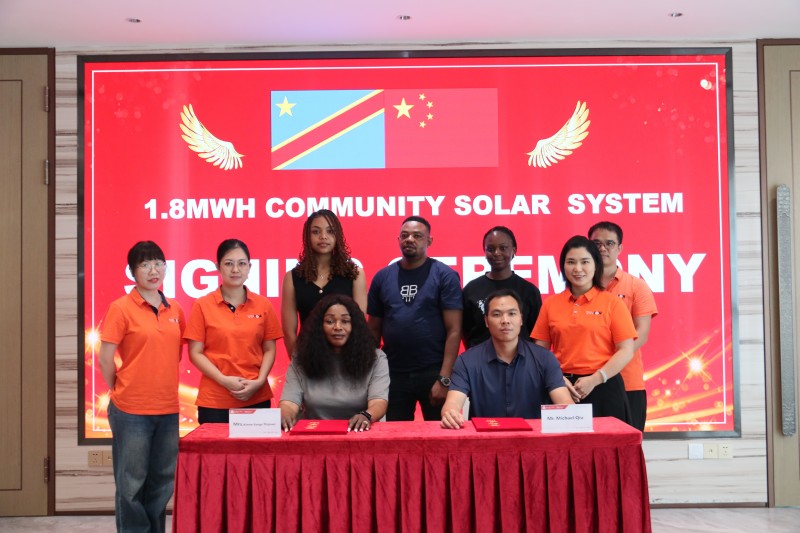
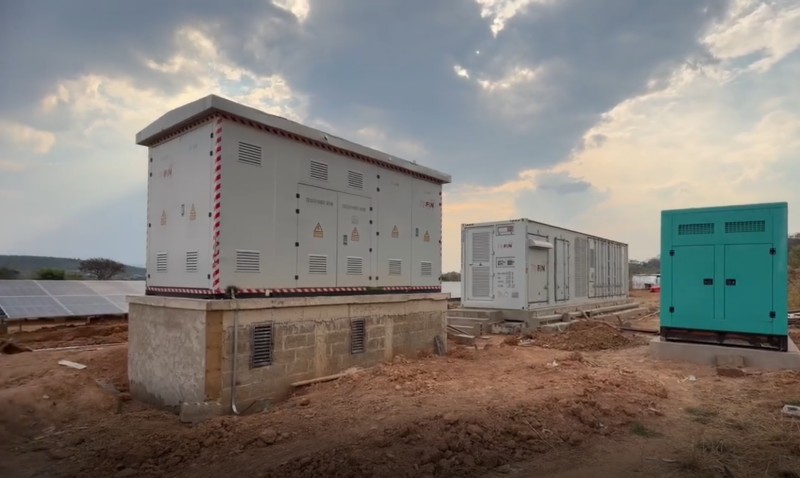
The most important result is that a community previously without electricity coverage gained access to an integrated power supply system.
580 households electrified. The project extends electricity access to hundreds of households that previously lacked coverage.
24-hour electricity supply reported. The project reports a supply availability target or operating outcome of 24 hours per day, supported by solar generation, battery storage, and backup diesel generation.
Improved daily living conditions. Electricity access can support household lighting, evening study, communications, and other daily activities that depend on reliable power.
Greater potential for productive activity. Access to electricity creates opportunities for community services and small-scale economic activities that would otherwise be constrained by the absence of power.
A more diversified energy supply. Solar generation and battery storage work alongside diesel backup, helping the system address periods when solar output is insufficient.
These outcomes demonstrate the role that integrated solar and storage systems can play in expanding electricity access in communities with limited or nonexistent grid infrastructure.
Successful village electrification requires more than supplying solar panels and batteries. Civil works, electrical routing, equipment installation, system integration, testing, and documentation are all essential parts of project execution.
The project support team includes a French-speaking engineer with more than 10 years of EPC experience, providing technical support across key installation and commissioning activities.
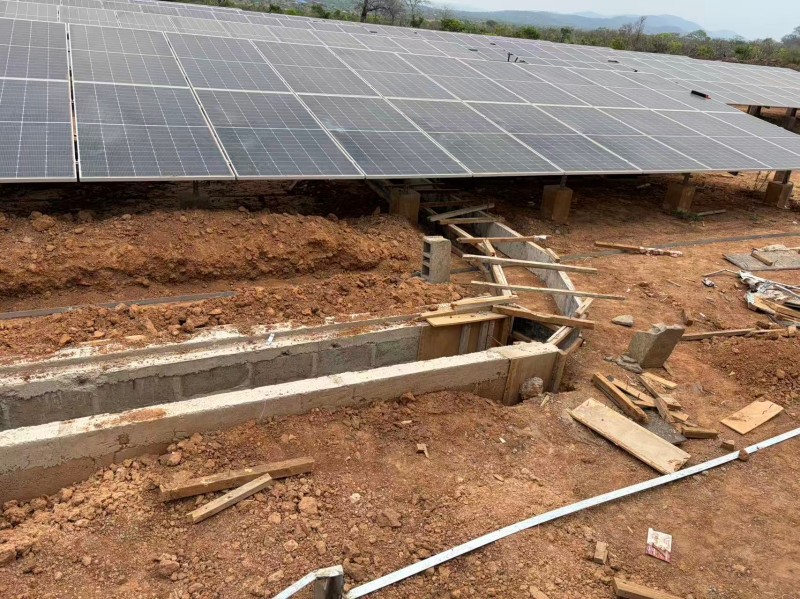
Technical support covers on-site route alignment, civil foundations, and the layout of electrical trenches and cable trays. These activities help ensure that the installation follows the intended engineering design.
The scope includes inspection and acceptance of:
Mounting structures and solar PV modules
Solar inverters and related electrical equipment
Containerized battery energy storage systems (BESS)
Medium-voltage (MV/HTA) power distribution equipment
These checks support installation quality and help identify issues before the system enters operation.
Support includes integration of SCADA industrial monitoring interfaces and remote telemetry. These functions can help operators observe system performance, assess operating conditions, and support troubleshooting.
The commissioning scope includes performance testing, verification of system operation, and preparation of final as-built documentation, also known in French as the dossier de récolement.
For village electrification projects, long-term operation and maintenance arrangements are essential. A complete project handover should identify the local operating partner or responsible organization, maintenance responsibilities, spare-parts arrangements, and the process for handling equipment faults.
Local O&M information to complete before publication: [Insert the confirmed local operating partner, maintenance team, spare-parts arrangements, and after-sales response time.]
Providing these details will help prospective project owners evaluate the long-term serviceability of the system rather than focusing only on installation capacity.
Project Name: Village Solar Power and Battery Storage Project
Location: Lubumbashi, Democratic Republic of Congo
System Capacity: 1 MW stated capacity
Battery Storage: 2 MWh
Households Electrified: 580
Commissioning Date: April 2025
Client Reference: Available upon authorization
This project represents more than the installation of a solar power plant. For a village that previously had no electricity coverage, it marks an important step toward improved living conditions and broader access to modern energy services.
With solar generation, battery storage, and diesel backup working together, the project provides a practical model for community electrification in regions where grid infrastructure is unavailable or insufficient.
For governments, rural electrification agencies, utilities, EPC contractors, and energy developers, the project illustrates how a megawatt-scale solar system with battery storage can form the foundation of a village electricity supply solution.
The ultimate value is the expansion of electricity access: helping households improve daily life, supporting education and productive activity, and creating a foundation for future community development.
A dedicated solar power plant can generate electricity locally, while a battery energy storage system stores surplus energy for use when solar output falls. A backup generator can supplement the system when solar generation and stored energy are insufficient. The distribution network and control system must be designed to match the village's electrical loads and operating requirements.
The project has a stated system capacity of 1 MW and a battery storage capacity of 2 MWh. It uses 1,760 solar modules rated at 600 W each, equivalent to a calculated PV capacity of 1.056 MWp.
The project is reported to provide first-time electrification to 580 households in the Lubumbashi area of the Democratic Republic of Congo.
The project reports electricity supply of 24 hours per day. Achieving continuous supply depends on the system's control configuration, battery state of charge, solar resource, electricity demand, backup-generator availability, and maintenance practices.
Battery storage helps balance fluctuations in solar generation and electricity demand. It can store solar energy for evening and nighttime use and provide power during periods of reduced sunlight, subject to the available stored energy and system design.
Diesel generators provide a complementary backup source when solar generation and battery storage cannot meet demand. This is especially relevant during prolonged periods of poor solar conditions or unusually high electricity consumption.
SCADA integration and remote telemetry help operators monitor equipment status, observe system performance, and support troubleshooting. The specific functions available depend on the monitoring architecture and equipment interfaces.
Key services include site and route coordination, civil works supervision, inspection of PV and battery equipment, electrical integration, medium-voltage equipment acceptance, SCADA interface integration, performance testing, and preparation of final as-built documentation.
A solar PV and battery storage system with backup generation may be suitable for communities with limited grid access, provided that system sizing, load profiles, solar conditions, distribution requirements, environmental factors, and long-term maintenance arrangements are assessed for each project.
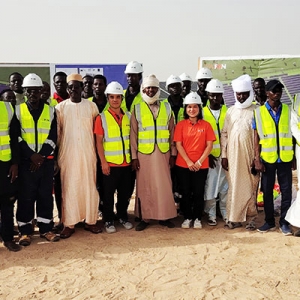
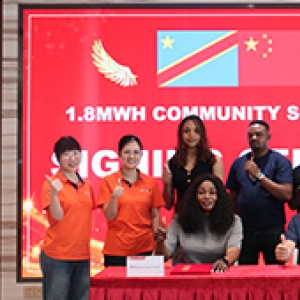
The King of the Democratic Republic of the Congo has provided a solar energy storage power station system for the village of Bunkeya to meet the electricity needs of 2500 small households in the village. As the village currently lacks access to the grid, the King requested the design of a 1MW solar panel system paired with a 1.8MWh lithium battery storage system to power the entire village.


Top 10 Solar Project Solution Factory In China


Address: 4th Floor, No. 7 Hongde Road, Nanzhuang, Chancheng District, Foshan City, GuangDong Province, China 公司地址:中国广东省佛山市禅城区南庄镇弘德路7号四楼